Stepping into the kitchen, many home cooks dream of effortless cooking and pristine cleanup. For decades, Le Creuset has been synonymous with premium cookware, primarily celebrated for its vibrant cast iron. Yet, their venture into the realm of the non-stick frying pan brings a new dimension of convenience, combining their legendary quality with the ease of a non-stick surface. But what truly makes a Le Creuset non-stick pan stand out, and more importantly, how can you ensure this investment delivers years of exceptional performance? As your strategic advisor and media expert for ADB Review, we’re here to demystify the Le Creuset non-stick experience, helping you understand its unique benefits and the simple secrets to its longevity.
The Le Creuset Non-Stick Difference: Craftsmanship Meets Convenience
When you choose a Le Creuset non-stick pan, you’re not just buying a cooking tool; you’re investing in a piece of culinary engineering. Unlike standard non-stick options, Le Creuset’s Toughened Non-Stick range is built with a focus on robust construction and advanced coating technology. Each pan begins with heavy-gauge, forged aluminum, a material chosen for its exceptional heat distribution properties, ensuring your food cooks evenly without annoying hot spots. This aluminum body is then treated to create a toughened finish, designed to withstand the rigors of daily use.
A critical feature is the specially constructed base, which incorporates a magnetic stainless steel disc. This thoughtful design ensures compatibility with all heat sources, including the latest induction hobs, making it a versatile staple for any kitchen. Both the interior and exterior boast a modern, PFOA-free non-stick finish. This commitment to a PFOA-free coating aligns with health and safety standards, offering superb food release and incredibly easy cleanup – a dream for healthier cooking with minimal oil or fat.
Le Creuset’s heritage in cookware is built on a foundation of meticulous craftsmanship. Their approach to non-stick maintains this philosophy, ensuring that even with the added convenience of easy release, the core principles of quality and durability remain paramount.
Mastering Your Le Creuset Non-Stick Pan: Usage and Best Practices
To unlock the full potential of your Le Creuset non-stick pan and ensure it serves you faithfully for years, understanding proper usage and care is key. Think of it as a partnership – treat your pan well, and it will reward you with outstanding culinary results.
Before First Use: The Essential Conditioning Step
Before you even think about cooking that first perfect omelet, your new Le Creuset non-stick pan needs a little preparation. After removing all packaging and labels, wash the pan thoroughly in hot, soapy water, then rinse and dry it completely. The crucial next step is conditioning the interior non-stick surface. Simply rub a thin film of vegetable or corn oil over the entire cooking area using a paper towel. Rinse the pan with hot water, then dry thoroughly. This initial conditioning helps protect the surface and promotes a longer lifespan, a practice that occasional re-conditioning will also support.
Heat Management: The Golden Rule for Longevity
One of the most common mistakes with non-stick cookware is using excessive heat. The golden rule for your Le Creuset non-stick pan is to use medium and low heat settings for the majority of your cooking. Allow the pan to heat gradually and evenly. While a medium-to-higher heat can be used initially for searing meats, poultry, or fish, always lower the heat once the pan is hot and the food is added. Crucially, never use your pan on a maximum or high heat setting, whether for pre-heating or cooking. Overheating can cause permanent damage, leading to discoloration, blistering, or even peeling of the non-stick surface, and such damage is not covered by the guarantee. If using a gas hob, always ensure flames are confined to the pan’s base and never extend up its sidewalls.
Choosing the Right Tools: Protecting Your Investment
The right utensils are paramount for preserving your non-stick surface. Le Creuset recommends using their Silicone Tools, and wooden or heat-resistant plastic tools are also excellent choices. While metal tools, spoons, or balloon whisks can be used with care, avoid harsh scraping, knocking them on the pan’s rim, or using utensils with sharp edges to cut food on the surface. For anyone wondering about electric mixers, handheld electric or battery-operated beaters or blenders should never be used on the non-stick surface. As culinary expert Chef Antoine Dubois often remarks, “A great pan deserves great care. The right tool isn’t just about cooking efficiency; it’s about protecting the heart of your kitchen.”
Cooking with Confidence: Suitable Foods and Techniques
The Le Creuset non-stick pan is incredibly versatile, ideal for everything from delicate eggs and pancakes to sautéing vegetables and searing fish. Its superior food release allows for healthier cooking with minimal oil, making it perfect for those mindful of their fat intake. When cooking with little to no added fat, pre-heat the pan on a medium setting for approximately two minutes before adding food. Always remain attentive during this time; never leave the pan unattended, as overheating a dry non-stick surface can cause irreversible damage. Also, be careful not to let oil or fat become smoking hot, and if it does, cool the pan before continuing.
Preserving Perfection: Cleaning and Maintenance for Your Le Creuset Non-Stick
Proper cleaning and storage are just as vital as careful cooking to maintain the pristine condition and performance of your Le Creuset non-stick pan.
Cool Down Before Clean Up: Preventing Thermal Shock
After cooking, always allow your pan to cool for a few minutes before cleaning. Never plunge a hot pan into cold water or fill it with cold water when it’s still hot. This sudden temperature change, known as thermal shock, can warp the pan and damage the non-stick coating.
Hand Washing vs. Dishwasher: The ADB Review Recommendation
While some sources might suggest dishwasher safety, to truly prolong the life and maintain the appearance and performance of the non-stick coating, ADB Review strongly recommends hand washing your Le Creuset non-stick pan in hot, soapy water. The tough, reinforced non-stick coating makes cleanup remarkably easy, often requiring just a gentle wipe. When hand washing, use only non-stick cleaning pads; avoid any metal, harsh abrasive, or very stiff pads/brushes, or abrasive cleaning agents on any part of the pan. Prolonged, regular dishwashing, even with mild detergents, can eventually mark or discolor cookware over time.
Dealing with Stubborn Spots: Gentle Care for a Pristine Surface
Occasionally, you might notice surface dulling or white deposits. These are normal and generally won’t affect performance. They can typically be removed by carefully cleaning the affected areas with a gentle nylon pad and a little water and washing-up detergent. Always rinse and dry thoroughly afterward. Remember, never use harsh chemicals or strong abrasive cleaners that could compromise the integrity of the non-stick finish.
Smart Storage: Keeping Your Pan Ready for Action
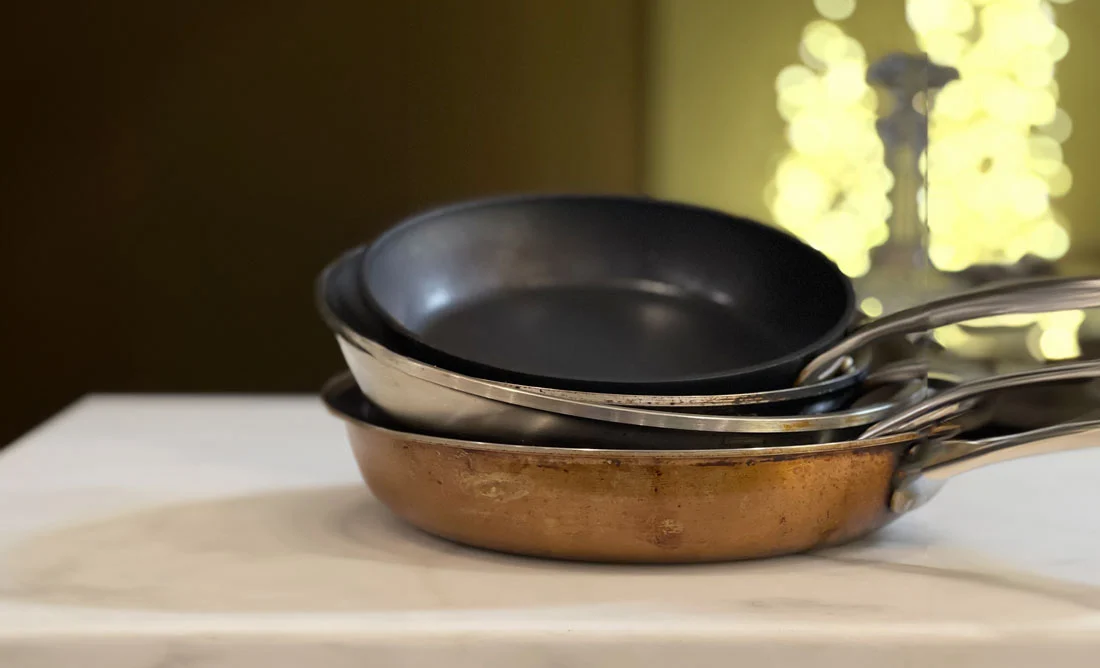
Proper storage helps protect your Le Creuset non-stick pan from accidental damage. Avoid stacking pans directly on top of each other without protection. If stacking is necessary, place a soft cloth or pan protector between them to prevent scratches. Also, refrain from storing raw, marinating, or cooked foods in the pans, as certain ingredients can cause surface damage over time.
Beyond the Basics: Health, Longevity, and Your Le Creuset Investment
Understanding the broader context of non-stick cookware, including health aspects and expected lifespan, provides a complete picture of your Le Creuset non-stick pan investment.
Health Considerations: The PFOA-Free Promise
A significant concern for many cooks has been the presence of PFOA (perfluorooctanoic acid) in older non-stick coatings. Le Creuset Toughened Non-Stick pans are made with modern, PFOA-free coatings, ensuring a safer cooking experience. This commitment reflects a dedication to consumer well-being alongside culinary performance. This PFOA-free nature means you can enjoy the convenience of non-stick without these specific chemical concerns.
Understanding the Lifespan: What to Expect from Premium Non-Stick
Even premium non-stick cookware, including the Le Creuset non-stick pan, has a finite lifespan. While Le Creuset’s “toughened” design aims for maximum durability, the non-stick coating will eventually degrade over many years of consistent use, typically between five to seven years for high-quality pans with proper care. This is a natural characteristic of all coated non-stick products. ADB Review’s tests and long-term user reports often show Le Creuset non-stick pans performing exceptionally well, with some lasting beyond five years, continuing to cook like new. The key differentiator is how you care for it, as improper use (like overheating or metal utensils) significantly shortens this lifespan.
The Le Creuset Guarantee: What It Covers (and What It Doesn’t)
Le Creuset offers a lifetime guarantee on its Toughened Non-Stick range, reflecting their confidence in the product’s quality and manufacturing. However, it’s crucial to understand the terms. This guarantee covers defects in materials and workmanship. It does not cover damage caused by misuse, such as overheating, aggressive use of metal utensils leading to score marks or severe scratching, or the natural degradation of the non-stick surface over extended time and use. Following the care instructions diligently is the best way to ensure you’re covered should a manufacturing defect arise.
Expert Insights: Why Le Creuset Non-Stick Stands Out
“In a world flooded with non-stick options, the Le Creuset non-stick pan holds its own by refusing to compromise on construction,” says Eleanor Vance, a veteran cookware analyst for ADB Review. “They’ve taken the robust foundation of their traditional cookware and applied a cutting-edge, PFOA-free non-stick finish. It’s a testament to how quality materials, combined with thoughtful design, can truly extend the performance life of a non-stick pan far beyond what many expect.”
Frequently Asked Questions
Are Le Creuset non-stick pans oven safe?
Yes, Le Creuset Toughened Non-Stick pans are completely multifunctional and safe for use in any domestic conventional or fan-assisted oven, as well as under any domestic grill. They are not suitable for microwave ovens.
How do I properly clean my Le Creuset non-stick pan?
After allowing your pan to cool, wash it by hand in hot, soapy water. Use a non-stick cleaning pad, and avoid abrasive cleaners or metal scouring pads. Rinse thoroughly and dry immediately. Hand washing is recommended over dishwashing to maintain the coating’s longevity.
Can I use metal utensils on my Le Creuset non-stick pan?
While Le Creuset states their toughened non-stick can withstand metal utensils with care, ADB Review, along with many experts, recommends using silicone, wooden, or heat-resistant plastic tools to maximize the lifespan of your pan’s non-stick coating and prevent scratches.
Is Le Creuset non-stick cookware PFOA-free?
Yes, all Le Creuset Toughened Non-Stick pans feature a modern, PFOA-free non-stick coating on both the interior and exterior surfaces, ensuring a safer cooking experience.
How long do Le Creuset non-stick pans typically last?
With proper care and adherence to usage guidelines, a Le Creuset non-stick pan can last significantly longer than average non-stick cookware, often performing well for five years or more. However, all non-stick coatings have a finite lifespan and will eventually degrade over time.
What kind of heat settings should I use?
Always use low to medium heat settings for most cooking tasks. For searing, you can start with medium-to-higher heat, but reduce it once food is added. Avoid maximum or high heat settings at all times, as this can permanently damage the non-stick surface.
Embrace Effortless Cooking with Le Creuset Non-Stick
The Le Creuset non-stick pan represents a compelling blend of Le Creuset’s renowned quality and the everyday convenience of non-stick cooking. From its robust, forged aluminum construction to its PFOA-free, toughened non-stick surface, it’s engineered to deliver consistent, superior performance. By following the simple guidelines for conditioning, heat management, utensil selection, and cleaning, you can significantly extend the life of your pan and continue to enjoy effortless food release and easy cleanup for years to come. At ADB Review, we believe in informed choices, and understanding the nuances of your Le Creuset non-stick pan ensures you’re equipped to make the most of this exceptional kitchen essential. Get ready to cook with confidence and elevate your culinary experience!