Ever faced that dreaded moment when your perfectly flipped pancake tears apart, or your delicate fish sticks stubbornly to the pan? You’re not alone! Many home cooks dream of culinary bliss where food gracefully slides onto the plate. That’s where the best non-stick frying pan becomes your kitchen hero, transforming everyday cooking into an absolute joy. But with a dizzying array of options out there, how do you pick the right one? At ADB Review, we’re dedicated to cutting through the noise to help you make an informed decision for a happier, healthier kitchen.
The Journey of Non-Stick: From Innovation to Evolution
The concept of a non-stick pan isn’t new, but its evolution has been remarkable. For decades, polytetrafluoroethylene (PTFE), commonly known by the brand name Teflon, dominated the market. It was, and still is, incredibly effective at preventing food from sticking, making delicate tasks like frying eggs and sautéing fish wonderfully simple. However, concerns grew around per- and polyfluoroalkyl substances (PFAS) – often dubbed “forever chemicals” – which were historically used in the manufacturing of some non-stick coatings.
“The industry has listened to consumer demand for safer, more sustainable options,” explains Chef Antoine Dubois, a culinary consultant with decades of experience in high-end kitchens and cookware testing. “Today, finding a high-quality, PFAS-free non-stick frying pan is not just possible, it’s becoming the standard.” This shift has led to exciting innovations, offering cooks more choices than ever before.
Decoding Non-Stick: Materials and Construction Unpacked
Understanding what goes into your pan is key to choosing the best non-stick frying pan for your needs. Different materials and construction methods offer distinct advantages:
PTFE (Traditional Non-Stick)
These pans are renowned for their exceptional food release. Imagine an egg dancing across the pan with minimal oil – that’s the magic of PTFE. They are incredibly slick, making clean-up a breeze. However, their primary drawback has been the historical association with PFOA and PFAS chemicals in older manufacturing processes. While modern PTFE pans are generally considered safe when used as directed (avoiding overheating and deep scratches), many cooks now prefer alternatives.
Ceramic Coatings
Marketed as the “non-toxic” alternative, ceramic non-stick pans typically feature a silicon-dioxide (sand-derived) gel applied to an aluminum base. They are free from PTFE, PFOA, and PFAS, which brings peace of mind to many health-conscious cooks. Ceramic pans heat up quickly and provide a beautifully smooth, slick surface when new.
What are “forever chemicals”?
“Forever chemicals” is a common term for per- and polyfluoroalkyl substances (PFAS). These are a group of synthetic chemicals that don’t break down naturally in the environment or the human body, leading to concerns about their long-term health and environmental impacts. Many modern non-stick pans are specifically manufactured to be PFAS-free.
However, ceramic coatings can be less durable than their PTFE counterparts. They often require gentler handling, such as using only wooden or silicone utensils and avoiding extreme temperatures, to maintain their non-stick properties over time. Chipping can also be a concern if not stored properly.
Hybrid Non-Stick
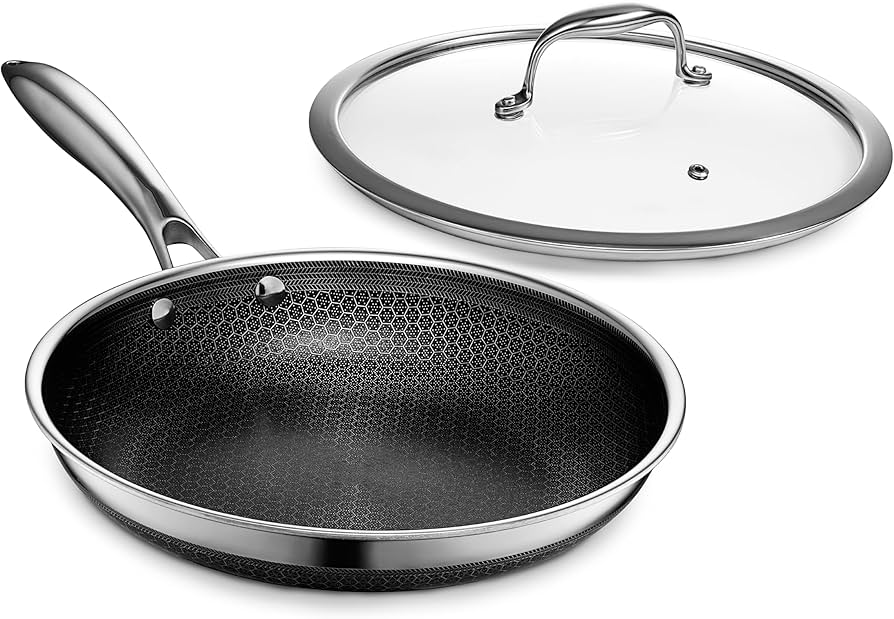
If you’ve ever wished for a pan that could sear a steak like stainless steel but release eggs like a dream, hybrid non-stick might be your answer. Brands like HexClad have popularized this technology, which combines a non-stick layer (often ceramic or PTFE-based) with a raised stainless steel or titanium pattern. The result is a surface that offers excellent food release while still allowing for impressive browning and searing.
The raised metal pattern also contributes to the pan’s durability, often making these pans compatible with metal utensils – a major plus for busy cooks! While they tend to come with a higher price tag, their versatility and robustness make them a top contender for the best non-stick frying pan for many.
Hard Anodized Aluminum
This refers to the base material rather than the coating itself. Hard anodizing is an electrochemical process that strengthens aluminum, making it more durable and resistant to corrosion. Hard-anodized pans often have a non-stick coating applied over this robust base, offering a sturdy and efficient cooking experience with excellent heat distribution.
Cast Iron and Carbon Steel (The “Low-Stick” Alternatives)
While not traditionally non-stick, properly seasoned cast iron and carbon steel pans develop a natural, low-stick surface over time. They are incredibly durable, can withstand very high temperatures, and are fantastic for searing and roasting. They are “forever” pans in the truest sense, often passed down through generations. However, they require careful seasoning and maintenance, are heavy, and won’t offer the effortless food release of a new ceramic or PTFE pan, especially for delicate items.
When considering construction, look for features like:
- Aluminum Core: Often layered between stainless steel, aluminum provides excellent and even heat conductivity, preventing hot spots.
- Ply Construction: Pans with multiple layers (e.g., 3-ply, 5-ply) are typically more robust, offer better heat retention, and resist warping.
Mastering the Art of Non-Stick Pan Usage and Care
Even the best non-stick frying pan won’t last forever without proper care. Think of it as a valued kitchen tool that thrives on a little TLC.
Initial Preparation
Before its inaugural use, many non-stick pans benefit from a quick “seasoning.” Wash the pan, dry it thoroughly, then rub a tiny bit of cooking oil (like vegetable or grapeseed oil) over the entire non-stick surface with a paper towel. Heat the pan over low heat for a minute or two, then let it cool. This helps to condition the surface and optimize its non-stick properties.
Mind Your Heat
Non-stick pans generally perform best at low to medium heat. High heat can damage the non-stick coating over time, causing it to degrade, bubble, or even release fumes (especially with older PTFE pans). Using an appropriately sized burner for your pan also ensures even heating and prevents overheating edges.
Choose Your Tools Wisely
For most non-stick pans, especially ceramic ones, it’s best to stick to wooden or silicone utensils. Metal spatulas, whisks, or spoons can scratch and chip the delicate coating, compromising its integrity and lifespan. Hybrid pans, however, are often designed to be metal utensil safe, offering greater flexibility.
The Gentle Clean
“The golden rule for non-stick pans? Hand washing is always preferred,” advises Chef Dubois. “The harsh detergents and high temperatures of dishwashers can be brutal on non-stick coatings, accelerating their wear and tear.”
Let your pan cool completely before washing. A sudden temperature change (hot pan under cold water) can cause warping, even in high-quality pans. Use warm, soapy water and a soft sponge or cloth. Avoid abrasive scrubbers or steel wool, which can scratch the surface. For stubborn residue, soak the pan for a few minutes before gently wiping it clean.
Smart Storage
To prevent scratches and chips, especially with ceramic non-stick pans, store them carefully. Use pan protectors (felt dividers) between stacked pans, or hang them on a rack. Avoid simply nesting them without protection.
The Benefits and Health Considerations of Choosing Wisely
The primary benefit of a quality non-stick pan is the sheer convenience it offers. Imagine cooking with minimal oil, leading to healthier meals, and then simply wiping the pan clean. This ease of use makes non-stick pans indispensable for daily cooking.
For many, the shift towards PFAS-free non-stick frying pans is a significant health consideration. While regulatory bodies generally deem modern non-stick coatings safe, choosing a product that explicitly states it’s free from PFAS, PFOA, lead, and cadmium provides an extra layer of reassurance. It aligns with a growing desire for “cleaner cooking” and a more mindful approach to kitchenware.
However, it’s also important to remember that non-stick pans aren’t typically designed for creating “fond” – the crispy browned bits at the bottom of a pan that are essential for building rich sauces. For those tasks, a stainless steel or cast iron pan remains the superior choice. The best non-stick frying pan complements, rather than replaces, other cookware in a well-equipped kitchen.
Perfect Pairings: What to Cook (and What Not To)
Your non-stick frying pan excels at certain culinary tasks, making it a star player for specific dishes:
Ideal For:
- Eggs: Fried, scrambled, omelets – they all glide effortlessly.
- Pancakes and Crepes: Achieve that perfect golden-brown finish without tearing.
- Delicate Fish: Pan-searing fish like salmon or cod is a breeze, preserving its flaky texture.
- Tofu: Get a lovely crispy exterior without the dreaded stick.
- Stir-fries: Especially with hybrid non-stick pans, stir-fries are easy to toss and clean up.
- Grilled Cheese & Quesadillas: Even melting cheese won’t be a problem.
Less Suitable For:
- High-Heat Searing for Fond: For developing deep flavors and pan sauces, stainless steel or cast iron are better as they allow fond to form.
- Browning Meats at Very High Temperatures: While some hybrid pans can handle a good sear, traditional non-stick coatings are not designed for extreme heat.
- Deglazing: Similar to fond, the process of deglazing for pan sauces is best done in pans that can withstand high heat and scraping.
Frequently Asked Questions (FAQ)
How long can I expect my best non-stick frying pan to last?
Even the highest quality non-stick pans won’t last as long as stainless steel or cast iron. With proper care, you can expect a good non-stick pan to last anywhere from three to five years. Its longevity significantly depends on how diligently you follow care instructions.
Are modern non-stick pans genuinely safe to use?
Yes, modern non-stick pans, especially those labeled PFAS-free, PFOA-free, lead-free, and cadmium-free, are considered safe for everyday cooking when used correctly. The key is to avoid extreme overheating and scratching the surface, as these actions can compromise the coating.
Can I put my non-stick frying pan in the dishwasher?
While some manufacturers claim “dishwasher safe,” it’s generally advised against. The high heat and strong detergents in dishwashers can degrade the non-stick coating over time. Hand washing with warm, soapy water is the best way to prolong your pan’s life.
What kind of non-stick frying pan do professional chefs use?
Professional chefs often use a variety of pans, selecting the best tool for the job. For tasks requiring high heat, searing, or fond creation, they typically opt for stainless steel or cast iron. For delicate items like eggs, crepes, or fish, many will have a dedicated high-quality non-stick pan, often a durable hybrid or a well-maintained PTFE pan, because the food release is unparalleled.
Is an expensive non-stick pan always better?
Not always, but there’s a correlation between price and quality in many cases. More expensive pans often feature superior construction (e.g., multi-ply stainless steel bases for even heating), more durable non-stick coatings (like advanced ceramic or hybrid systems), and better ergonomics. However, even a mid-range pan, cared for diligently, can offer excellent performance.
The Final Word from ADB Review
Choosing the best non-stick frying pan is an investment in culinary convenience and healthier cooking. Whether you prioritize cutting-edge hybrid technology for ultimate durability, the peace of mind of a PFAS-free ceramic option, or the traditional slipperiness of a modern PTFE pan, there’s a perfect match waiting for you.
At ADB Review, we believe that understanding your cookware empowers you to make smarter choices. By selecting a high-quality pan and committing to its proper care, you’ll unlock years of effortless cooking, transforming your kitchen into a haven of culinary success. So go ahead, find your ideal non-stick companion, and start creating delicious, perfectly released dishes with confidence!