Stepping into the kitchen, the thought of food effortlessly gliding from pan to plate is a culinary dream for many. That dream is precisely why the non-stick frying pan has become an indispensable tool in kitchens worldwide. For home cooks and seasoned chefs alike, a reliable non-stick pan transforms daily cooking from a chore into a joy, ensuring perfectly cooked meals and a breeze for cleanup. As “ADB Review,” we pride ourselves on being your trusted guide in the dynamic world of kitchenware, and today, we’re diving deep into what makes the best non-stick frying pans, helping you navigate the choices to find your perfect match from among the top 12 Non Stick Frying Pan options.
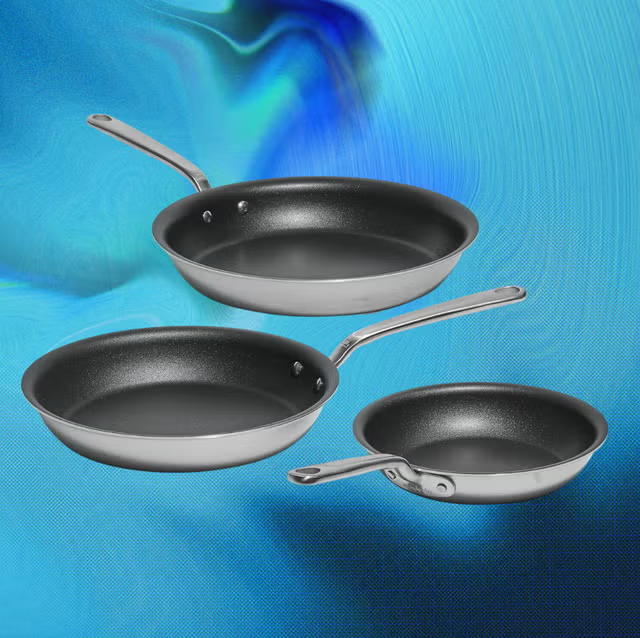
The Evolution of Non-Stick: A Culinary Game Changer
The story of the non-stick pan is one of accidental discovery and continuous innovation. It began with the serendipitous invention of Polytetrafluoroethylene (PTFE) by Roy Plunkett in 1938. Initially a military secret, PTFE, commonly known by the brand name Teflon, soon revolutionized cooking by offering a surface so slick that food simply couldn’t stick. This groundbreaking material dramatically reduced the need for excessive oils and fats, paving the way for healthier cooking habits.
Over the decades, as consumer awareness around materials and health grew, the non-stick landscape continued to evolve. Concerns surrounding perfluorooctanoic acid (PFOA), once used in the manufacturing of some PTFE coatings, led the industry to move towards PFOA-free formulations. Today, while most pans proudly declare themselves PFOA-free, the innovation hasn’t stopped, with ceramic-based and hybrid non-stick options offering alternatives that cater to diverse preferences and cooking philosophies. This journey highlights a commitment to safer, more efficient, and healthier cooking solutions for everyone.
Decoding Non-Stick Pan Materials and Coatings
Understanding the core components of your non-stick pan is crucial for making an informed choice. It’s not just about what prevents sticking, but how that prevention is achieved and what it means for durability and safety.
PTFE (Polytetrafluoroethylene) Coatings
Often recognized by the brand name Teflon, PTFE remains a dominant force in non-stick technology. These coatings are renowned for their exceptional food release and ease of cleaning, making them ideal for delicate foods like eggs and fish. However, PTFE has its considerations. It’s generally recommended to use PTFE-coated pans at low to medium heat, as overheating beyond approximately 500°F (260°C) can cause the coating to break down and potentially release fumes. Modern PTFE coatings are PFOA-free, addressing past health concerns related to that specific chemical, but it’s always wise to follow manufacturer guidelines for safe use.
Ceramic Coatings
For those seeking alternatives to PTFE, ceramic non-stick coatings offer an attractive option. These coatings are typically silica-based gels, applied using a sol-gel process without the use of PFAS (per- and polyfluoroalkyl substances). Often marketed as a more “natural” or “eco-friendly” choice, ceramic pans are generally free from synthetic chemicals like PFOA and PTFE. They perform admirably for easy food release and are easy to clean. The primary trade-off with ceramic is often durability; based on extensive testing, these coatings can degrade faster than PTFE over time, losing their non-stick properties, particularly with improper care or exposure to very high heat.
Hybrid Surfaces
A newer innovation in the market, hybrid non-stick pans like some from HexClad or Anolon X, combine the best of both worlds. They often feature a laser-etched stainless steel grid with non-stick coating nestled in between. This design aims to offer the durability of stainless steel, allowing for higher heat cooking and even metal utensil use, while retaining the food-release benefits of non-stick. They provide a unique cooking experience, bridging the gap between traditional non-stick and highly durable professional cookware.
Hard-Anodized Aluminum and Base Materials
Beneath the non-stick coating, the pan’s base material plays a vital role in its performance. Many non-stick pans feature a hard-anodized aluminum base. Aluminum is prized for its excellent heat conductivity, allowing pans to heat up quickly and relatively evenly. Hard anodization strengthens the aluminum, making it more durable and scratch-resistant. Some aluminum pans also incorporate a stainless steel plate on the bottom, making them compatible with induction cooktops, which require magnetic materials. Stainless steel tri-ply constructions offer superior heat distribution and durability, though they tend to be heavier and often come at a higher price point.
What Makes a Non-Stick Frying Pan Truly Stand Out?
Choosing the right non-stick pan from the multitude of options, including various 12 non stick frying pan lists, requires considering several key attributes beyond just the coating.
“Choosing the right non-stick pan is about balancing your cooking style with the pan’s features for maximum enjoyment and longevity,” says Chef Anya Sharma, a culinary consultant specializing in kitchenware. It’s about finding that sweet spot where convenience meets performance and durability.
Here are the critical factors that elevate a good non-stick pan to a great one:
- Exceptional Non-Stick Performance: This is the obvious one, but it’s about consistency. Does it release food effortlessly every time, even with minimal oil? Top pans, such as those consistently praised like the Tramontina Professional or All-Clad Hard Anodized series, excel here.
- Even Heat Distribution: Hot spots lead to unevenly cooked food. A well-designed non-stick pan, often with a thick base, ensures heat spreads uniformly across the cooking surface for consistent results. Aluminum construction, especially hard-anodized, typically provides quick and even heating.
- Durability and Longevity: While no non-stick pan lasts forever, the best ones resist scratches and maintain their non-stick properties for a considerable period. Coatings like those found in the Circulon A1 Series with Scratch Defense are engineered for enhanced resilience.
- Oven Safety: Many recipes start on the stovetop and finish in the oven. Look for pans with oven-safe handles and coatings, usually rated up to 400°F or 500°F, increasing their versatility.
- Comfortable Handle Design: A secure, ergonomic handle that stays cool on the stovetop is essential for safe and comfortable cooking, especially when tossing ingredients or transferring the pan.
- Weight and Balance: The ideal pan is heavy enough to feel substantial and stable on the burner but light enough to lift and maneuver easily, particularly for larger sizes like a 12-inch non stick frying pan.
- Induction Compatibility: If you have an induction cooktop, ensure the pan has a magnetic base; many modern non-stick pans include this feature, often a stainless steel plate bonded to an aluminum body.
- Ease of Cleaning: Beyond its non-stick properties, the best pans are a breeze to clean, usually requiring just a wipe or gentle wash. While some are dishwasher safe, handwashing is often recommended to preserve the coating.
Introducing ADB Review’s Top Non-Stick Frying Pans
While we can’t individually review 12 specific products here, ADB Review identifies the characteristics and categories that define the crème de la crème of non-stick frying pans available today. When considering a 12 non stick frying pan assortment, we look for a range that offers diverse strengths, ensuring there’s a perfect match for every cook and kitchen.
Our selection criteria focus on pans that consistently deliver on performance, durability, and user satisfaction across various price points. We consider factors like the effectiveness of the non-stick coating, the quality of the base material ensuring even heat, and thoughtful design elements such as comfortable handles and oven compatibility.
For example, pans like the All-Clad Hard Anodized Fry Pans often top “best overall” lists due to their exceptional non-stick performance and robust construction. The Tramontina Professional Fry Pans frequently win “best value” for combining impressive non-stick prowess with affordability. For those prioritizing eco-friendly options, brands like Caraway with their ceramic coatings offer a compelling choice. Then there are innovations like the HexClad Hybrid Pan, blending stainless steel with non-stick for unparalleled durability and high-heat cooking capabilities. Even durable options like the OXO Good Grips Non-Stick 12-Inch Pro Skillet consistently impress with their durable non-stick surface and user-friendly design.
|
Our Picks for the Best Nonstick Frying Pan in 2026
As an Amazon Associate I earn from qualifying purchases.
|
||
| Num | Product | Action |
|---|---|---|
| 1 | CAROTE Nonstick Frying Pan Skillet,Non Stick Granite Fry Pan Egg Pan Omelet Pans, Stone Cookware Chef\'s Pan, PFOA Free,Induction Compatible(Classic Granite, 8-Inch) |

|
| 2 | SENSARTE Nonstick Frying Pan Skillet with Lid, 12 Inch Large Deep Frying Pan, 5 Qt Non Stick Saute Pan with Cover, Induction Pan, Healthy Non Toxic Cooking Pan with Helper Handle, PFOA PFOS Free |
|
| 3 | Amazon Basics Non Stick Kitchen Cookware 15-Piece Set, Non-Induction, Includes Pots, Pans, and Utensils, Black |
|
| 4 | SENSARTE Nonstick Frying Pan Skillet, Swiss Granite Coating Omelette Pan, Healthy Stone Cookware Chef\'s Pan, PFOA Free (8/9.5/10/11/12.5 Inch) (9.5 Inch) |
|
| 5 | Tramontina Professional 10-Inch Non Stick Frying Pan, Heavy-Gauge Aluminum Skillet with Reinforced Nonstick Coating, Red Handle, Dishwasher and Oven Safe |
|
| 6 | Amazon Basics Non Stick Kitchen Cookware 8-Piece Set, Non-Induction, Includes Pots and Pans, Black |
|
| 7 | Bionic Turtle Design Nonstick Ceramic Frying Pan (2.5 qt, 10.3\"), Non Toxic,PFAS & PFOA Free, Dishwasher Safe, Compatible with All Stovetops, Durable Cookware for Home Cooking |
|
| 8 | Starfrit The Rock 2-PC 9.5\" (24cm) and 8\" (20cm) Non-Stick Fry Pans - Durable Forged Aluminum - Oven Safe - PFOA Free - Easy to Clean - Black |
|
| 9 | Amazon Basics Ceramic Nonstick Pots and Pans Cookware Set, Dishwasher & Oven Safe, Even Heating, 10-Piece Set, Copper Color |
|
| 10 | Tramontina Professional 12-Inch Non Stick Large Frying Pan, Heavy-Gauge Aluminum Skillet with Reinforced Nonstick Coating, Red Handle, Dishwasher and Oven Safe |
|
Mastering Your Non-Stick Pan: Usage and Care Tips
To truly extend the life and performance of your favorite 12 non stick frying pan, proper usage and diligent care are paramount. Treat your non-stick pan with kindness, and it will reward you with years of effortless cooking.
- Mind the Heat: Non-stick pans are generally best used on low to medium heat. High heat can damage the non-stick coating over time, causing it to break down and lose its effectiveness. For searing or high-heat cooking, consider using stainless steel or cast iron.
- Choose the Right Utensils: Metal utensils are the archenemies of non-stick coatings. Always opt for silicone, wood, or heat-resistant plastic spatulas and spoons to prevent scratches and prolong the pan’s life.
- Gentle Cleaning is Key: While many non-stick pans are advertised as dishwasher safe, handwashing is almost always the best approach. Use warm, soapy water and a soft sponge or cloth. Avoid abrasive scrubbers or harsh detergents that can erode the non-stick surface. For stubborn residue, soak the pan for a few minutes before gently cleaning.
- Proper Storage: Stacking non-stick pans without protection can lead to scratches. Place a paper towel, felt pan protector, or a soft cloth between pans when storing them to prevent contact damage.
- Avoid Cooking Sprays: Believe it or not, aerosol cooking sprays can leave a sticky residue on non-stick surfaces over time that’s difficult to remove and can actually cause sticking. A small amount of butter or oil is usually sufficient.
The Health Angle: Benefits and What to Watch For
The appeal of non-stick pans extends beyond convenience to significant health benefits and considerations.
Benefits for Healthier Cooking
The most direct health benefit of a non-stick pan is its ability to facilitate low-fat cooking. With food naturally releasing from the surface, you can use significantly less oil or butter, reducing calorie and fat intake in your meals. This is particularly advantageous for cooking delicate items like fish, eggs, and pancakes, where excessive fat might otherwise be needed to prevent sticking.
Understanding Coatings and Safety
Modern non-stick pans are almost universally labeled “PFOA-free.” This is a crucial distinction, as PFOA was the substance linked to health concerns in older non-stick coatings. However, discussions around PFAS (per- and polyfluoroalkyl substances) as a broader chemical class, some of which are used in PTFE manufacturing, continue to evolve. While the finished PTFE product itself is considered inert, the environmental impact of manufacturing processes is a growing area of focus. Ceramic coatings are often marketed as a “PFAS-free” alternative, offering peace of mind for those prioritizing these considerations.
The key takeaway for users is to avoid overheating any non-stick pan, particularly those with PTFE coatings. As mentioned, temperatures exceeding 500°F (260°C) can cause fumes to be released. By adhering to low-to-medium heat cooking, you minimize any potential risks and ensure the longevity of your pan.
Beyond Eggs: Best Dishes for Your Non-Stick Pan
While non-stick pans are champions for eggs, their versatility extends to a wide array of dishes, though some are better suited than others.
Suitable Dishes for Your Non-Stick Pan
- Eggs: Scrambled, fried, omelets, frittatas – they all slide off beautifully.
- Pancakes, Crepes, and French Toast: Achieve perfect golden-brown results with ease.
- Delicate Fish: Flaky fish like sole, tilapia, or salmon cook without sticking or breaking apart.
- Sautéed Vegetables: Cook tender vegetables with minimal oil.
- Sauces: Prevent sauces from sticking and burning at the bottom of the pan.
- Grilled Cheese and Quesadillas: Get a perfectly crispy exterior without scorching.
Dishes Not Always Suited for Non-Stick
- High-Heat Searing: For achieving a deep, caramelized crust on steaks or other meats, traditional non-stick pans often can’t reach or maintain the necessary high temperatures without risking damage to the coating. This is where cast iron or stainless steel truly shine.
- Deglazing: The process of adding liquid to a hot pan to dissolve browned bits (fond) from the bottom is crucial for building flavor in many dishes. Non-stick pans are designed to prevent fond from forming, so they aren’t ideal for recipes requiring deglazing.
- Braising/Long Simmers: While some non-stick pans can handle longer cooking times, materials like enameled cast iron or Dutch ovens are generally preferred for slow-cooked dishes due to their superior heat retention and durability.
Frequently Asked Questions (FAQ)
Q1: How long do non-stick pans typically last?
A1: The lifespan of a non-stick pan varies depending on the coating type, usage frequency, and care. Generally, PTFE-coated pans can last anywhere from 1 to 5 years, while ceramic coatings may show signs of wear sooner, often within 1 to 3 years. Proper care significantly extends their life.
Q2: Are ceramic non-stick pans truly better than PTFE?
A2: “Better” is subjective and depends on your priorities. Ceramic pans are often preferred for being PFAS-free and more ‘natural,’ but they tend to be less durable and can lose their non-stick properties faster than PTFE. PTFE offers superior longevity and food release but requires strict temperature management.
Q3: Can I put my non-stick pan in the dishwasher?
A3: While some non-stick pans are labeled “dishwasher safe,” it’s highly recommended to handwash them. The harsh detergents and high heat in dishwashers can degrade the non-stick coating over time, reducing its effectiveness and lifespan.
Q4: What temperature is too high for a non-stick pan?
A4: For most PTFE-coated non-stick pans, exceeding 500°F (260°C) is considered too high, as the coating can begin to break down and release fumes. Always cook on low to medium heat to protect your pan and ensure safety.
Q5: How do I remove burnt food from a non-stick pan without damaging it?
A5: To remove burnt food, first let the pan cool completely. Then, fill it with warm, soapy water and let it soak for 15-30 minutes. Gently scrub with a soft sponge or cloth. Avoid using metal scourers or abrasive cleaners.
Elevate Your Everyday Cooking with ADB Review
A great non-stick frying pan is more than just a piece of cookware; it’s an invitation to a more enjoyable and less stressful cooking experience. From the quick morning scramble to delicate fish dinners, the right pan from among the top 12 non stick frying pan selections empowers you to create delicious meals with minimal fuss and effortless cleanup.
At ADB Review, we believe that understanding your tools is the first step to culinary mastery. By appreciating the materials, caring for your pans correctly, and choosing wisely, you invest in years of cooking pleasure. So go ahead, explore the possibilities, and let your perfect non-stick pan inspire countless delectable creations in your kitchen. What will you cook up next?